Cart 0

Lago Calima

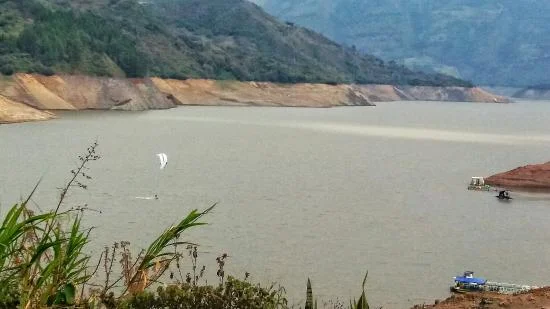
Calima Lake (Spanish: Lago Calima) is the largest artificial lake in Colombia with an area of 70 km2. It is located in the municipality of Darién in the Valle del Cauca Department.

The lake is part of a hydroelectric project for generating power for the department. C.V.C (Corporación Autónoma Regional del Valle del Cauca) started construction of the lake by 1961.

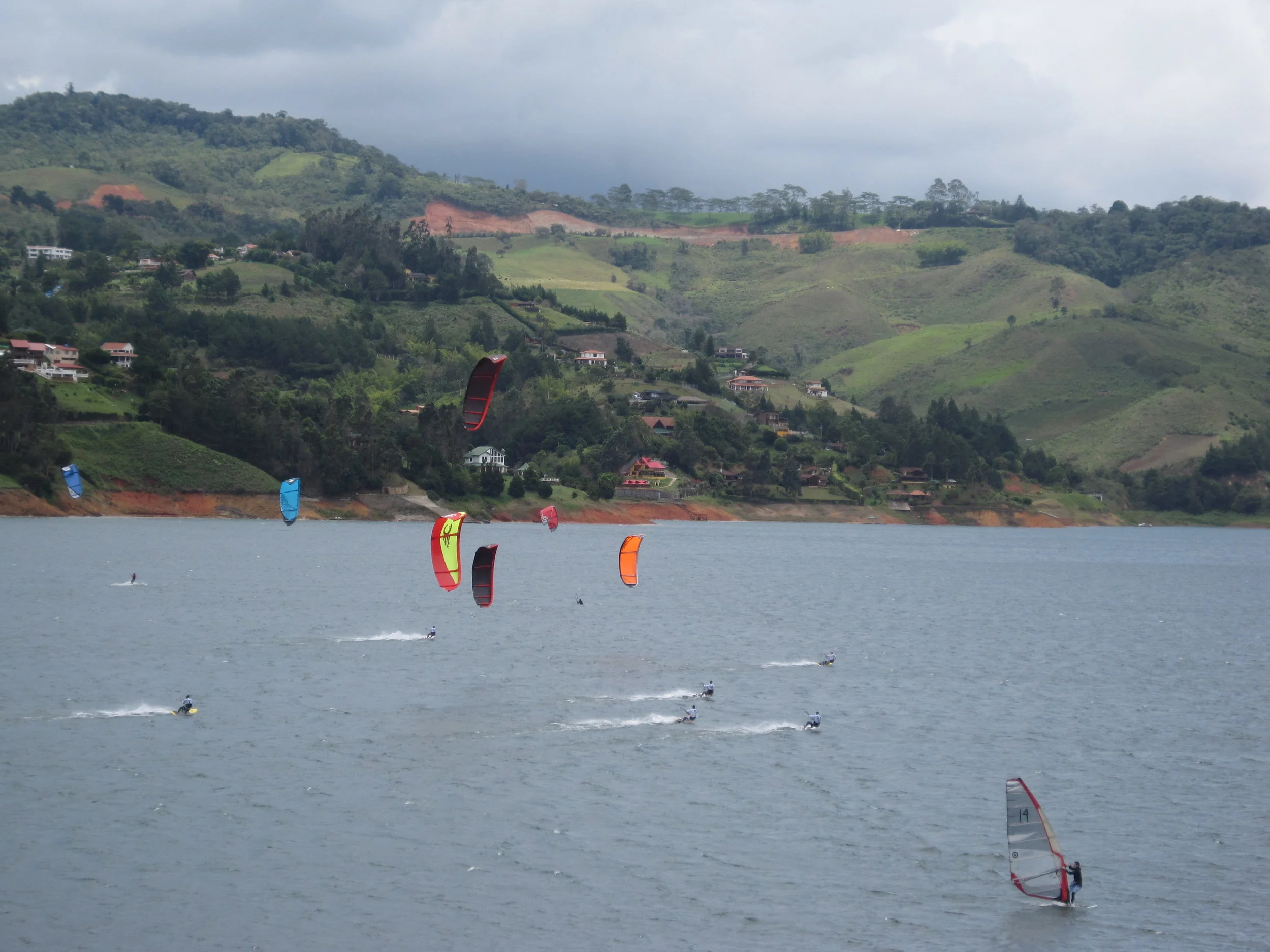
Calima Lake has become a place for water sports and leisure activities. Vacation centers, restaurants and camping zones were built near the lake, and is currently a popular place frequented by both national and international tourists, especially those from nearby cities and towns like Cali and Buga. The elevation of the lake is 1,500 meters (4,900 feet) above sea level.


Where to stay
kite schools
Wind Report
053.jpg

Cartagena

The city of Cartagena, known in the colonial era as Cartagena de Indias (Spanish: Cartagena de Indias [kaɾtaˈxena ðe ˈindjas], is a major port founded in 1533, located on the northern coast of Colombia in the Caribbean Coast Region. It was strategically located between the Magdalena and Sinú rivers and became the main port for trade between Spain and its overseas empire, establishing its importance by the early 1540s. During the colonial era it was a key port for the export of Peruvian silver to Spain and for the import of African slaves. It was defensible against pirate attacks in the Caribbean. It is the capital of the Bolívar Department, and had a population 971,592 as of 2016. It is the fifth-largest city in Colombia and the second largest in the region, after Barranquilla. The urban area of Cartagena is also the fifth-largest urban area in the country. Economic activities include the maritime and petrochemicals industries, as well as tourism.

The city was founded on June 1, 1533, and named after Cartagena, Spain, which in turn was named after Carthage in Tunisia. Settlement in the region around Cartagena Bay by various indigenous people dates back to 4000 BC. During the Spanish colonial period Cartagena served a key role in administration and expansion of the Spanish empire. It was a center of political, ecclesiastical, and economic activity.[5] In 1984, Cartagena's colonial walled city and fortress were designated a UNESCO World Heritage Site.


Where to stay
kite schools
Wind Report
kitesurf-cartagena2.jpg

San Andrés

San Andrés is a Colombian coral island in the Caribbean Sea. Historically tied to the United Kingdom, and politically part of Colombia, San Andrés and the nearby islands of Providencia and Santa Catalina form the department of San Andrés, Providencia and Santa Catalina. San Andrés, in the southern group of islands, is the largest of the department. The official languages of the department are Creole, Spanish, and English.

While San Andrés is located 50 km (31 mi) south of Providencia, the Colombian archipelago is approximately 750 km (470 mi) north of the Colombian mainland. This archipelago encompasses a total area of 57 km2(22 sq mi), including the outer cays, reefs, atolls and sand banks, with the area of the islands being 45 km2 (17 sq mi).In 2000, it was declared a UNESCO Biosphere Reserve, named “Seaflower Biosphere Reserve”, which not only includes the islands but also about 10% of the Caribbean Sea, amounting to a vast marine area of 300,000 km2(120,000 sq mi) The purpose of this declaration is to ensure that the ecosystem, which is rich in biodiversity, is well preserved and conserved.


Where to stay
kite schools
Wind Report
464290685_1280x720.jpg

Tolú

Tolú is a small municipality and town in Sucre Department, northern Colombia by the Caribbean sea. The municipality has an area of 500 km². The name of Tolú comes from a tree called the Balsam of Tolú.

Tolú offers ecotourism ideal for diving and rain forest treks.

The fishing town has now become a popular weekend and holiday destination for Colombian tourists, particularly those from Medellín. Activities in the area include day trips to visit the Archipelago de San Bernardo. This is a beautiful collection of pristine Caribbean islands, one of which, Isla Palma contains an impressive Ecological Park. Nearby land attractions include the Volcan de Lodo or Mud volcano of San Antero

Tolú is a word that comes from the name of the Indians that inhabited the place, called Tolúes


Where to stay
kite schools
Wind Report
cabo-20-790x375.jpg

Barranquilla

Barranquilla (American Spanish: [baraŋˈkiʝa]) is a city and municipality located in northern Colombia. It is the only major city in South America that was populated before its formal foundation. Barranquilla is located near the Caribbean Sea. The city is located in the Atlántico Department, of which it is the capital. Barranquilla is the largest city and port in the northern Caribbean Coast region of Colombia, with a population of 2,370,753 as of 2011 in its metropolitan area, which makes it Colombia's fourth most populous city after Bogotá, Medellín and Cali.

Barranquilla lies strategically next to the delta of the Magdalena River, 7.5 kilometres (4.7 miles) (originally 25 kilometres (16 miles) before rapid urban growth) from its mouth at the Caribbean Sea, serving as port for river and maritime transportation within Colombia. It is also the main industrial, shopping, educational and cultural centre of the Caribbean Region of Colombia. The city is the core of the Metropolitan Area of Barranquilla, which also includes the municipalities of Soledad, Galapa, Malambo, and Puerto Colombia.


Where to stay
kite schools
Wind Report
4e0a117f28c5f910c42a3554f854a8ee.jpg

La Guajira

La Guajira (Spanish pronunciation: [la ɣwaˈxiɾa]) is a department of Colombia. It occupies most of the Guajira Peninsula in the northeast region of the country, on the Caribbean Sea and bordering Venezuela, at the northernmost tip of South America. The capital city of the department is Riohacha.

Various indigenous tribes populated the arid plains of the region prior to the Spanish arrival to the Americas. In 1498, Alonso de Ojeda sailed around the peninsula of La Guajira, but the first to set foot in what is known today as La Guajira was the Spanish explorer Juan de la Cosa in 1499. During the colonial era, the territory of La Guajira was disputed by the governors of Santa Marta and Venezuela, owing to deposits of pearls. English pirates, Frenchmen, and Germans also disputed the territory. Martin Fernandez de Enciso founded Nuestra Señora Santa María de los Remedios del Cabo de la Vela, the first village in the territory. In 1535, Nicolás de Federmánrefound the settlement as the village of Riohacha, as a result of constant attacks. In 1544, it was moved to the site of the present-day city. In 1871, the region was separated from the Department of Magdalena, and La Guajira became a national territory in its own right. The Intendance of La Guajira was created in 1898.


Where to stay
kite schools
Wind Report
IMG_20160709_234535.jpg

Cavo de la Vela

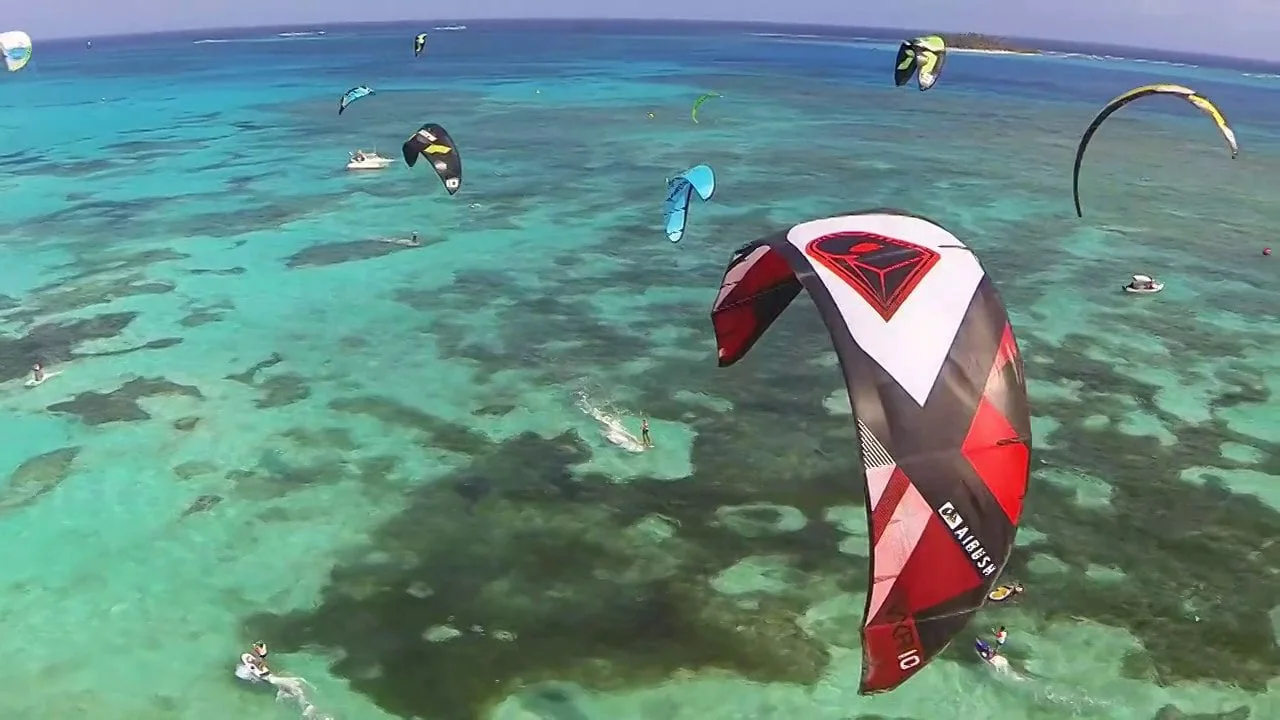
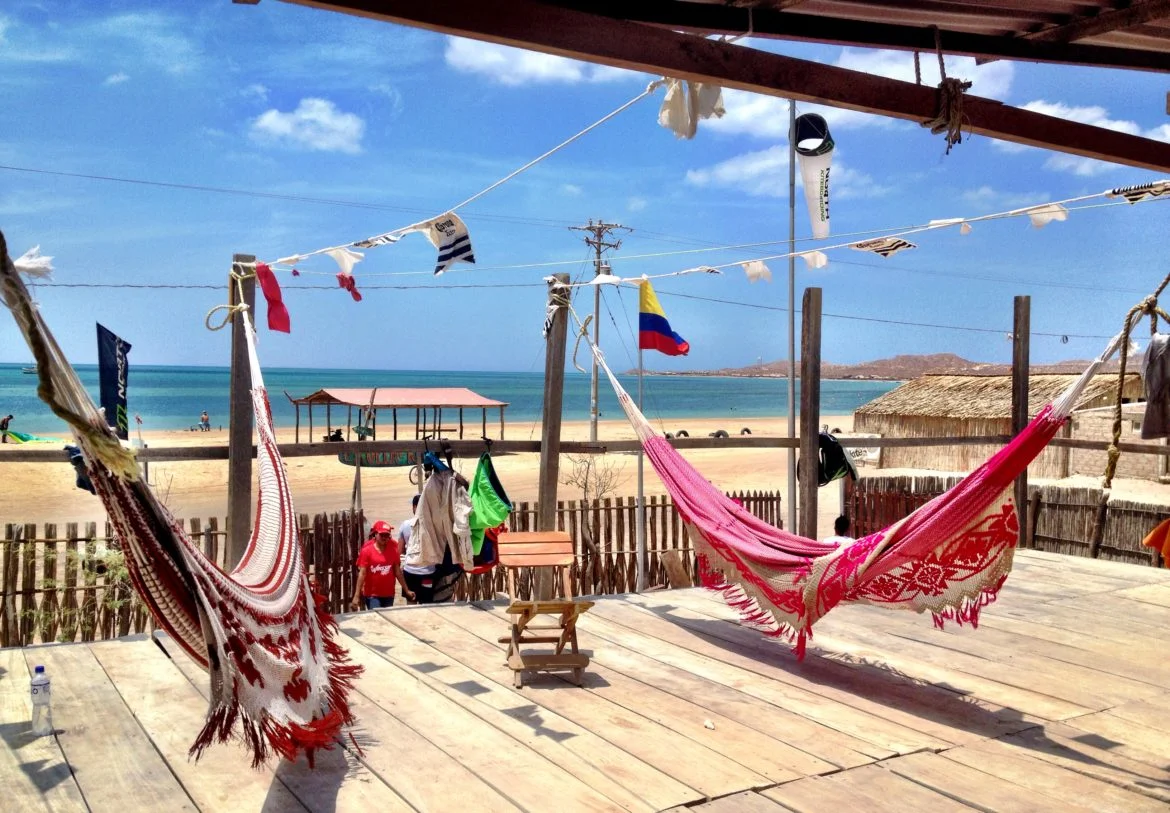
Cabo de la Vela (Spanish for "cape of sails") is a headland in the Guajira Peninsula in Colombia with an adjacent small fishing village. It is a popular ecotourism destination of the Caribbean Region of Colombia


Where to stay
kite schools
Wind Report
IMG_6105-1170x813.jpg

Chivor

Chivor is a town and municipality in the Eastern Boyacá Province, part of the Colombian department of Boyacá. The mean temperature of the village in the Tenza Valley is 18 °C (64 °F) and Chivor is located at 215 kilometres (134 mi) from the department capital Tunja. Chivor is world-famous for its emeralds.


Where to stay
kite schools
Wind Report
hostal-cruzando-el-embalse.jpg

Check your Wind Report

Adicora, Venezuela

Los Roques, Venezuela

Playa El Yaque, Venezuela

Coche Island, Venezuela